Madeleine of Valois was born on 10 August 1520. She was the fifth child of King Francis I of France and his wife, Claude. She was a frail child and her father, fearing for her health, sent her to live in the warm Loire Valley. She was raised by her aunt, Marguerite of Navarre, until her father’s second marriage, when his second wife, Eleanor of Austria, took her into her household.
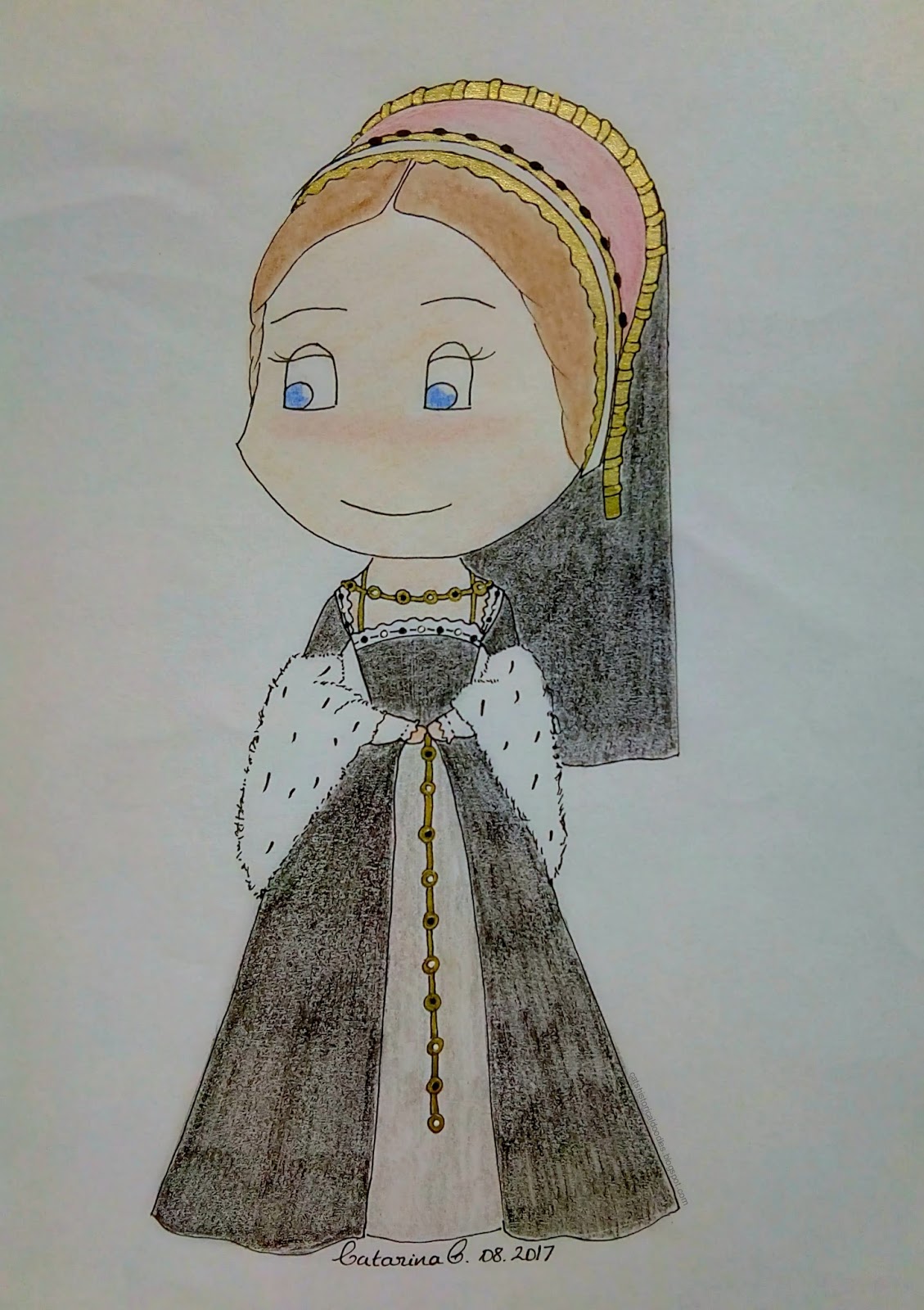
Three years before Madeleine’s birth, the Franco-Scottish Treaty of Rouen was made to bolster the Auld Alliance after Scotland’s defeat at the battle of Flodden: in this treaty, it was included a marriage to a French Princess for the Scottish King. A marriage was planned between James V of Scotland and Madeleine. However, as Madeleine’s health was frail, another French bride was proposed: Mary of Bourbon.
Mary was then contracted to marry the Scottish King and he travelled to France in 1536 to meet her, but smitten with the delicate Madeleine, he asked Francis I for her hand instead. Initially, Francis refused: he was afraid that the harsh climate of Scotland would prove fatal to his daughter’s health. When he realised Madeleine was very interested in marrying James as well, Francis reluctantly gave permission.
They married on 1 January 1537 at Notre Dame Cathedral, in Paris. After months of festivities and celebrations, the couple left France for Scotland in May 1537. By this time, Madeleine’s health had deteriorated even further and she was very ill when they landed in Scotland.
Three years before Madeleine’s birth, the Franco-Scottish Treaty of Rouen was made to bolster the Auld Alliance after Scotland’s defeat at the battle of Flodden: in this treaty, it was included a marriage to a French Princess for the Scottish King. A marriage was planned between James V of Scotland and Madeleine. However, as Madeleine’s health was frail, another French bride was proposed: Mary of Bourbon.
Mary was then contracted to marry the Scottish King and he travelled to France in 1536 to meet her, but smitten with the delicate Madeleine, he asked Francis I for her hand instead. Initially, Francis refused: he was afraid that the harsh climate of Scotland would prove fatal to his daughter’s health. When he realised Madeleine was very interested in marrying James as well, Francis reluctantly gave permission.
They married on 1 January 1537 at Notre Dame Cathedral, in Paris. After months of festivities and celebrations, the couple left France for Scotland in May 1537. By this time, Madeleine’s health had deteriorated even further and she was very ill when they landed in Scotland.
Madeleine wrote to her father from Edinburgh on 8 June 1537, saying she was feeling better and her symptoms had diminished. However, a month later, on 7 July 1537, a month before her 17th birthday, Madeleine died in her husband’s arms at Edinburgh.
Less than a year after her death, her husband married the widowed Marie of Guise, who had attended his wedding to Madeleine.
Less than a year after her death, her husband married the widowed Marie of Guise, who had attended his wedding to Madeleine.
 |
| Madeleine of Valois Corneille de Lyon (c. 1536) |
Comentários
Enviar um comentário