Avançar para o conteúdo principal

Stephanie of Hohenzollern-Sigmaringen

Stephanie Josepha Friederike Wilhelmine Antonia (Portuguese: Estefânia Josefa Frederica Guilhermina Antónia) was born in Sigmaringen on 15 July 1837. She was the eldest daughter of Karl Anton, Prince of Hohenzollern, and his wife, Princess Josephine of Baden.
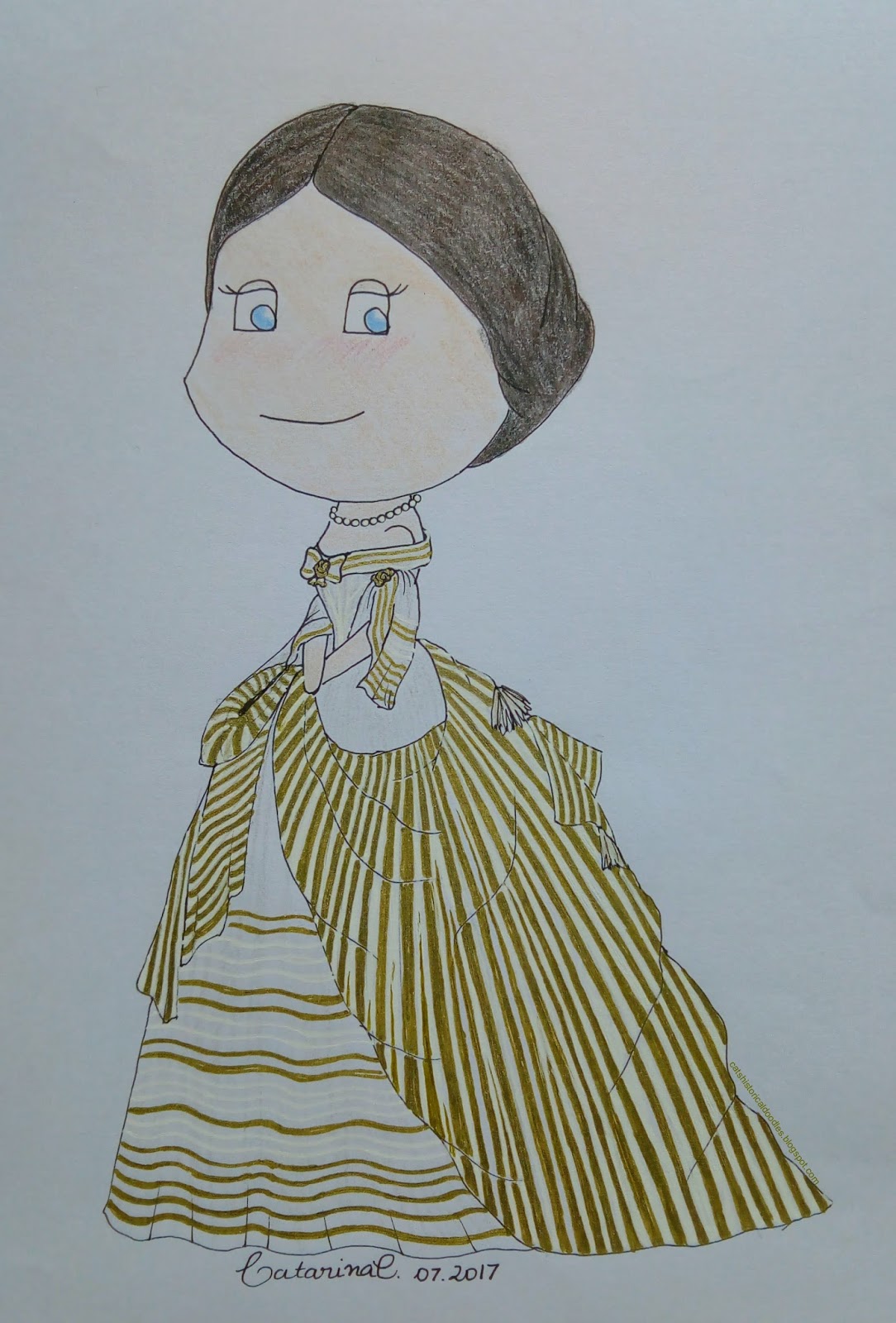

On 29 April 1858, Stephanie married by proxy to King Pedro V of Portugal. She arrived in Portugal on 17 May 1858 and, on the following day, she married the King in Lisbon, becoming Queen consort of Portugal. They spent their honeymoon in Sintra.

In an effort to impress his new wife, Pedro had her rooms at Palácio das Necessidades lavishly decorated. He had ordered furniture, chandeliers, carpets and fabrics from Paris.
Stephanie wrote home that the Portuguese understood luxury better than dignity. She missed home and didn't particularly enjoy Lisbon; however, she was very fond of Sintra and Mafra.

Stephanie and her husband were very charitable. Together, they founded several hospitals and charity institutions, which gave her a great deal of popularity among the Portuguese people. The Hospital D. Estefânia, in Lisbon, was named in her honour.

Shortly after her wedding, the Queen fell ill with diphtheria. She died on 17 July 1859, at the age of 22. The King and the people were deeply affected by her death, for they had come to love her dearly.

Stephanie of Hohenzollern-Sigmaringen
Karl Ferdinand Sohn
(1859)

Comentários

Mensagens populares deste blogue

Mihrimah Sultan

Mihrimah was born in Istanbul in 1522; she was the daughter of Sultan Süleyman I (aka The Magnificent) and his concubine, Hürrem Sultan . Her mother was freed in 1533 or 1534 and became the Sultan’s legal wife. On 26 November 1539, Mihrimah, aged 17, married Rüstem Pasha, who later rose to become her father’s Grand Vizier. Though this union was unhappy, Mihrimah flourished as a patroness of the arts and continued her travels with her father until her husband’s death. Mihrimah had two children: Osman and Hümaşah. Mihrimah travelled the Ottoman Empire with her father as he surveyed the lands and conquered new ones. In international politics, her mother sent letters to the Sigismund II, King of Poland, and the contents of these letters were mirrored in the letters Mihrimah sent. Although there is no proof of Hürrem and Mihrimah’s direct involvement in her half-brother Mustafa’s downfall, Ottoman sources and foreign accounts indicate that it was widely believed they worke...

Margaret of Provence

Margaret (French: Marguerite) was born during the spring of 1221, in Forcalquier. She was the eldest daughter of Ramon Berenguer IV, Count of Provence, and Beatrice of Savoy. She had three younger sisters, who would all become queens like her: Eleanor (Queen of England), Sanchia (Queen of Germany) and Beatrice (Queen of Sicily). Margaret has a especially close relationship with Eleanor, and they remained friends until they grew old. In 1233, Blanche of Castile sent one of her knights to Provence to meet Margaret, whose grace and beauty was famous. Margaret and her father entertained the knight well, and soon Blanche and Ramon Berenguer were negotiating a marriage contract between Margaret and Louis IX of France, Blanche's son. Margaret was escorted to Lyon by her parents, where the marriage treaty was signed. From there, she was escorted to her wedding ceremony, in Sens. On 27 May 1234, Margaret became the wife of Louis IX and Queen of France; she was just 13. The marriage...

Tamar of Georgia

Tamar (Georgian: თამარი, Tamari) was born circa 1160 to George III, King of Georgia, and his wife, Burdukhan of Alania. The name Tamar is of Hebrew origin and, like other biblical names, was favoured by the Georgian Bagrationi dynasty because of their claim to be descended from David, the second King of Israel. Tamar's youth coincided with a major upheaval in Georgia. In 1177, her father was confronted by a rebellious faction of nobles. The intention was to dethrone George III in favour of the King's nephew, Demna, who was considered by many to be a legitimate royal heir of his murdered father, David V. Demna's cause was just a pretext for the nobles to, led by the pretender's father-in-law Ivane Orbeli, to weaken the crown. George III managed to crush the revolt and embarked on a repression campaign on the defiant aristocratic clans. Ivane Orbeli was put to death and the surviving family was driven out of Georgia. Demna was castrated and blinded on his uncle'...