Pedro de Alcântara Maria Fernando Miguel Rafael Gonzaga Xavier João António Leopoldo Vitor Francisco de Assis Júlio Amélio was born on 16 September 1837, in Lisbon. He was the eldest son of Queen Maria II of Portugal, and her husband, Ferdinand II of Saxe-Coburg and Gotha-Koháry. As the eldest son of the monarch, Pedro was the heir apparent to the throne and was titled Prince Royal (Príncipe Real).
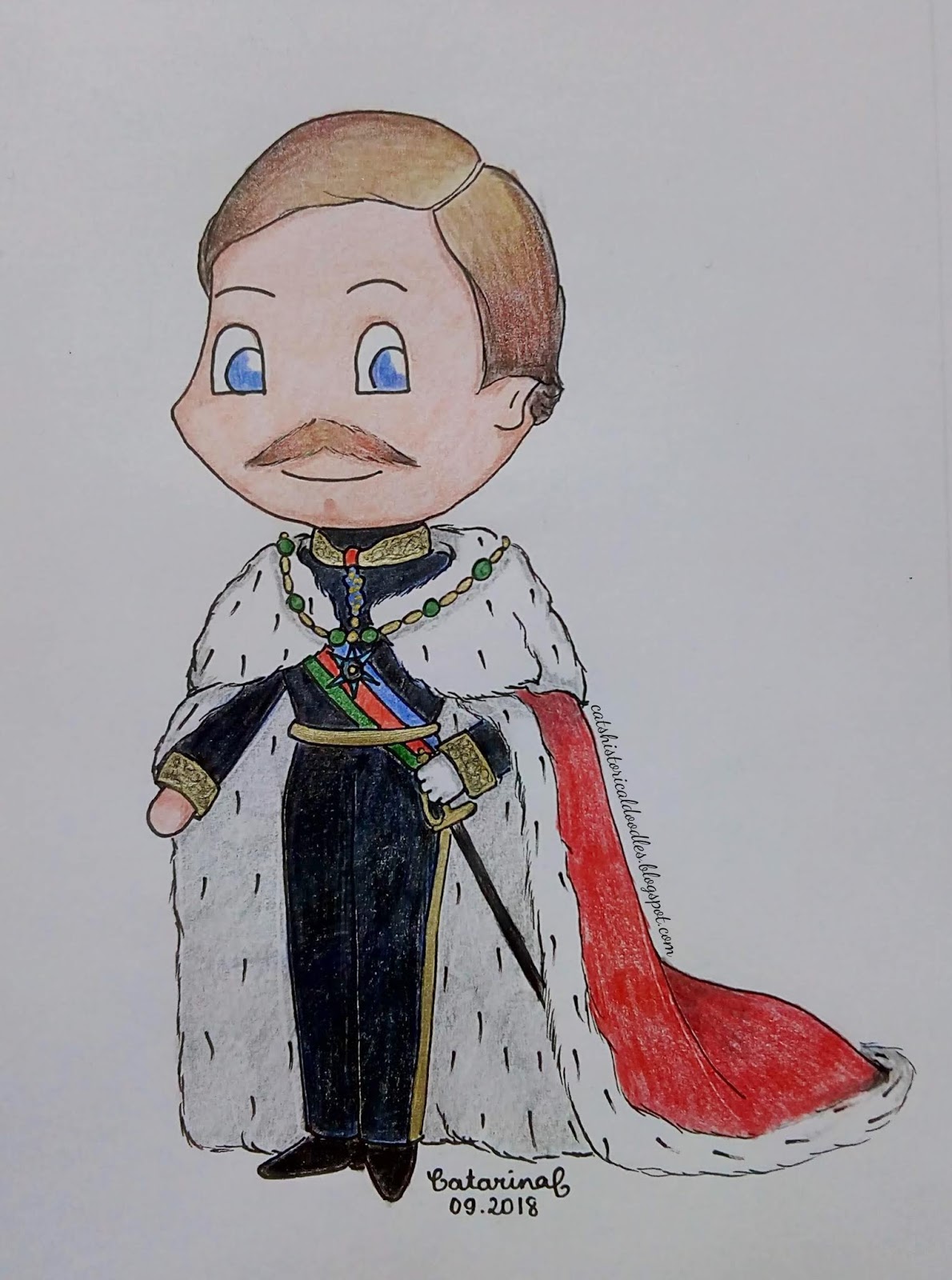
Although he was very young when he became King of Portugal (just 16 years old!), Pedro was considered by many as an exemplary monarch. He reconciled the people with the royal family, after his mother's reign had been borne of a civil war.
His father played a very important role in the beginning of Pedro's reign, serving as regent and advising the young King. Pedro is often described as a socially conscious king due to his education, which included community-related work and a wide knowledge of the European continent. He also studied sciences and philosophy and was fluent in Greek and Latin, and studied English.
In 16 September 1855, when he turned 18, Pedro was officially acclaimed King of Portugal. In that same year he presided over the inauguration of the first electric telegraph in the country. In 1856, he inaugurated the railroad between Lisbon and Carregado. It was also during his reign that commenced the regular boat travels between Portugal and Angola.
Pedro dedicated himself to his country, thoroughly studying the governmental proposals. He created the Curso Superior de Letras (precursor of the Faculty of Arts and Humanities of the University of Lisboa), which he founded with his own money.
The King was a staunch abolitionist. During his reign, a French slave-ship was confiscated on the coast of Mozambique, and its captain was arrested. The French government demanded the release of the ship and a big compensation. This episode shows the abolitionist convictions of the monarch, but at the same time attests to the fragility of Portugal in face of the other European countries.
Portugal fell victim to two epidemies during Pedro's reign: a cholera one (1853-1856) and a yellow-fever one (1856-1857). During that time, the King visited hospitals and sat with the sick, instead of seeking refuge, something that earned him the love of the people.
In 1858, Pedro married by proxy with Princess Stephanie of Hohenzollern-Sigmaringen (Portuguese: Estefânia), who would sadly die in 1859. Pedro and Stephanie were very concerned with the public health, and together founded several public hospitals and charities. After her death, Pedro fulfilled her wish and founded the Hospital D. Estefânia, in Lisbon (still in activity).
Pedro V of Portugal died on 11 November 1861, aged just 24. Apparently, the cause of his death was typhoid fever, but the people suspected he had been poisoned (and some mutinies occurred!). His death caused a great sadness in all levels of society. He had no children, so he was succeeded by his younger brother, Luís.
In 16 September 1855, when he turned 18, Pedro was officially acclaimed King of Portugal. In that same year he presided over the inauguration of the first electric telegraph in the country. In 1856, he inaugurated the railroad between Lisbon and Carregado. It was also during his reign that commenced the regular boat travels between Portugal and Angola.
Pedro dedicated himself to his country, thoroughly studying the governmental proposals. He created the Curso Superior de Letras (precursor of the Faculty of Arts and Humanities of the University of Lisboa), which he founded with his own money.
The King was a staunch abolitionist. During his reign, a French slave-ship was confiscated on the coast of Mozambique, and its captain was arrested. The French government demanded the release of the ship and a big compensation. This episode shows the abolitionist convictions of the monarch, but at the same time attests to the fragility of Portugal in face of the other European countries.
Portugal fell victim to two epidemies during Pedro's reign: a cholera one (1853-1856) and a yellow-fever one (1856-1857). During that time, the King visited hospitals and sat with the sick, instead of seeking refuge, something that earned him the love of the people.
In 1858, Pedro married by proxy with Princess Stephanie of Hohenzollern-Sigmaringen (Portuguese: Estefânia), who would sadly die in 1859. Pedro and Stephanie were very concerned with the public health, and together founded several public hospitals and charities. After her death, Pedro fulfilled her wish and founded the Hospital D. Estefânia, in Lisbon (still in activity).
Pedro V of Portugal died on 11 November 1861, aged just 24. Apparently, the cause of his death was typhoid fever, but the people suspected he had been poisoned (and some mutinies occurred!). His death caused a great sadness in all levels of society. He had no children, so he was succeeded by his younger brother, Luís.
 |
Pedro V of Portugal
Miguel Ângelo Lupi
1860
|
Comentários
Enviar um comentário